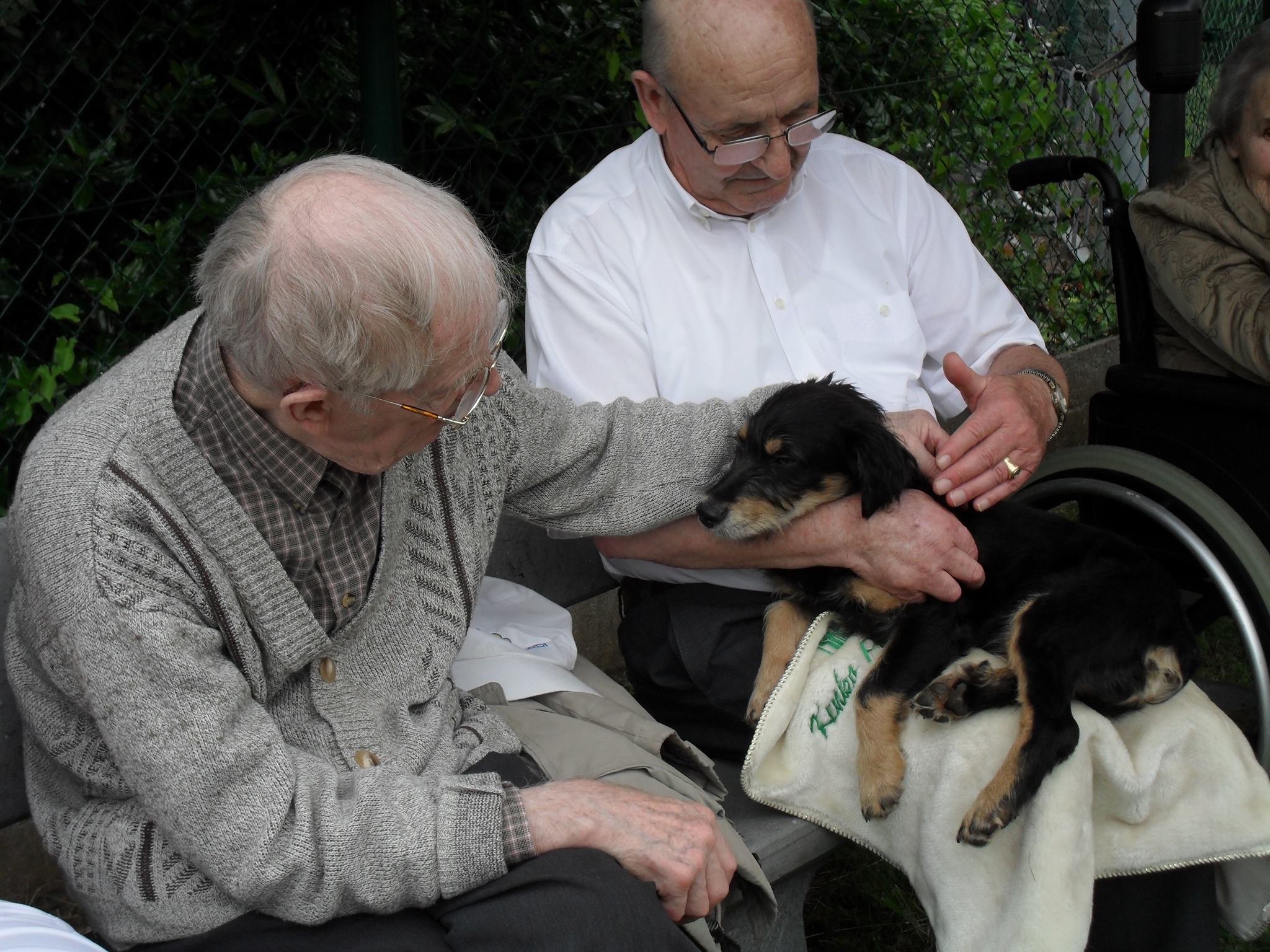
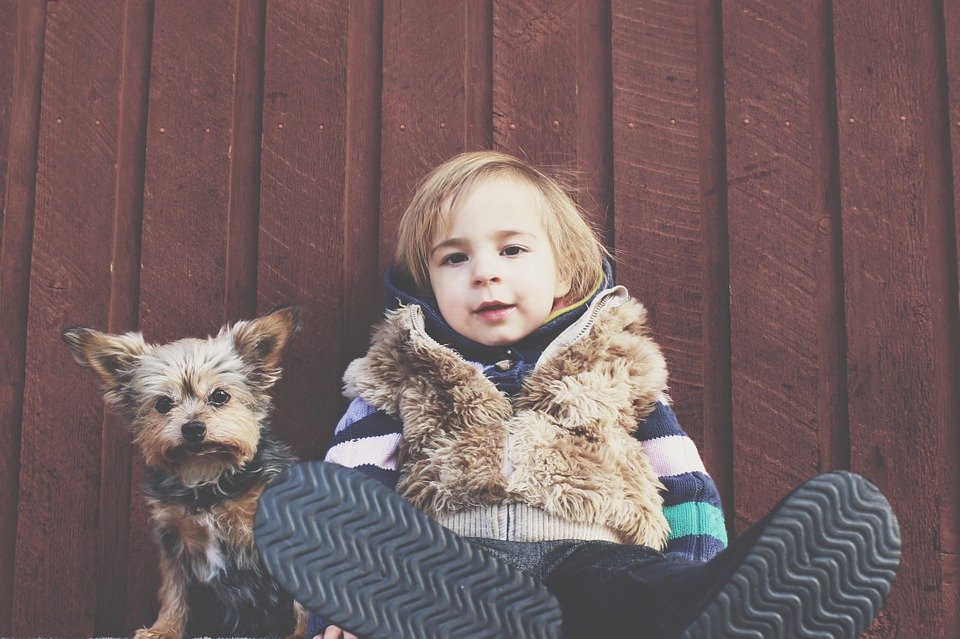
It is important to be aware that children and dogs have to learn how to interact with eachother. In this blog, a couple of do’s and don’ts when it comes to children and the(ir) dogs.
Do not:
- Send the dog away when the child is getting your attention
- Grumble at the dog if he shows interest in a child
- Only teach the dog to stay in its bench, basket or bed when the child is at home.
Do:
- Interact with the dog attention in the presence of the child
- Have the dog make a connection between “child” and “fun”, for example by giving him something tasty every time you feed or change the baby and take the dog with you when you go out with the baby in the pram
- Give the dog its own safe place during pregnancy, quietly teaching it to go and stay there on command, preferably with a nice chewy treat or bone
Children and respect:
Do not:
- Let the child walk or crawl towards the dog, certainly not when it is asleep in its own safe place (bed, basket…)
- Allow the child to interfere with a dog that is eating, or has a toy or a bone
- Allow children to scream loudly and run around the dog
- Allow children to crawl on the floor near the dog
- Let children challenge or give orders to the dog
Do:
- Let the dog come to the child to do something fun
- Have the (slightly older) child hand feed the dog, unless the dog is overly protective of its food or is very tense while eating
- Let children play with the dog, for example, a hide and seek game; the child can hide a treat or toy for the dog to find. Both will enjoy the game, it is not threatening to the dog and the child and dog will develop a better bond
Children and strange dogs:
Do not:
- Let the child stare at a dog (this is threatening to a dog)
- Send a child out alone with a dog
- Allow the child to lean over the dog’s neck
- Let the child give the dog commands
- Allow a child to pet a strange dog
- Make a child frightened of dogs
- Let the child scream or run away when a dog is coming (the harder the child screams or runs, the more interesting a dog will find the child)
- Allow the child to hit the dog with his hands, or raise his hands in the air
Do:
- Teach the child to look past the dog (no direct eye contact)
- Take the children out together with the dog for a pleasant walk
- Allow your child to play safely and have fun with the dog
- Teach a (scared) child to stand still quietly when a dog approaches and to look the other way
- Teach a child to keep their hands in their pockets or behind their back. Most dogs know from experience that people may have treat in their hands, so they tend to go to the hands. If hands are held behind the back the dog may briefly sniff but will quickly lose interest.
- Teach your child the three basic rules when approaching for dogs. Teach a child to handle dogs
- Teach your child three rules for stroking dogs:
- First ask your mother or father (and if they aren’t with you: don’t stroke the dog!!)
- Then ask the dog’s owner (and if he isn’t there: don’t stroke the dog!!)
- If you both your parents and the owner say it is okay then you have to ask the dog: carefully extend your hand and see if the dog comes to you.
- If the dog won’t approach you, he doesn’t feel like being petted and you have to leave him alone.
- Don’t stroke a dog on the top of the head him, most dogs don’t like that at all.
Misconceptions:
- “He looks so sweet”
Looks are not the same as character. Look at the dog’s body language, not their cutiness - “He is wagging his tail”
Dogs wag their tail a lot, but it doesn’t Always mean they are happy. Mostly it is meant to calm a person/situation/other dog down. Only when the behind of the dog moves along with the tails, is the dog truly happy and pleased. - “We have a dog ourselves”
Every dog had it own set of need and individuality. Respect that.
Twelve golden rules for children when dealing with their dog:
- Treat your dog the way you want to be treated yourself.
- A dog can appear to look cute but still don’t approach it without asking the owner if it is ok.
- Never threaten a dogµ;
- Do not stare at a dog.
- Do not pull or stand on the dog’s tail.
- Do not disturb a dog while it is eating.
- If you want to play with a dog, be aware that it has large teeth.
- Never come between dogs that are fighting and never attempt to pull them apart.
- Even if you are afraid of dogs, never run away from a dog.
- You have two hands; the dog only has its teeth to hold something.
- If you play with a dog, make sure that an adult is nearby; especially if it is a dog you do not know.
- Every dog is different.
Hope this helps you allong. If you have other questions on how to handle child-dog situations, feel free to contact us!


 Kinderen en honden – interview met Inge Pauwels