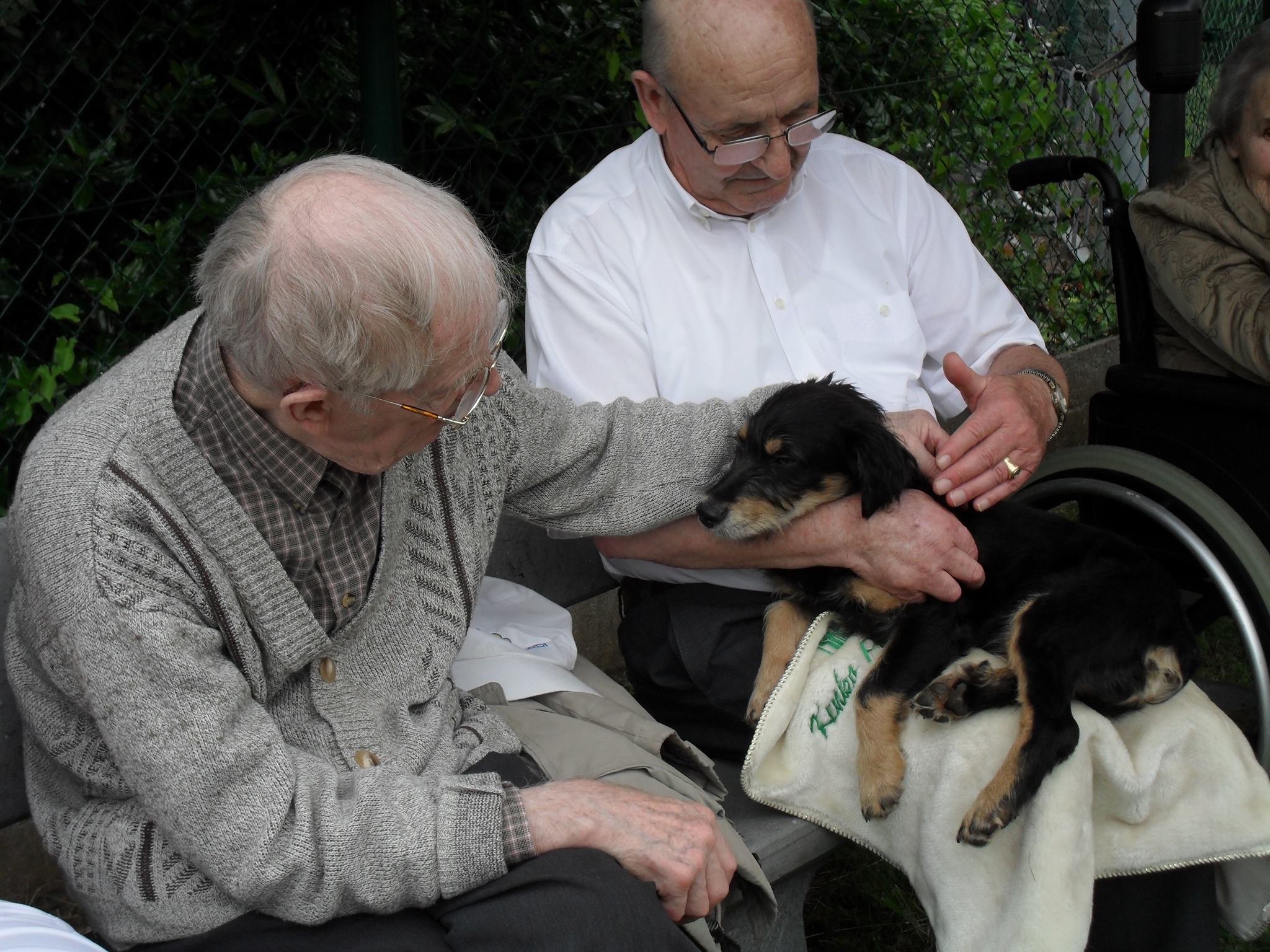
An emotional support dog provides one specific person with emotional support, closeness, and stability in everyday life. Within the Therapiedier vzw pathway, the dog is also trained to perform at least three individual support tasks. The dog can provide emotional support in a range of stressful, demanding, or unpredictable situations. This support is not necessarily linked to a medical condition.
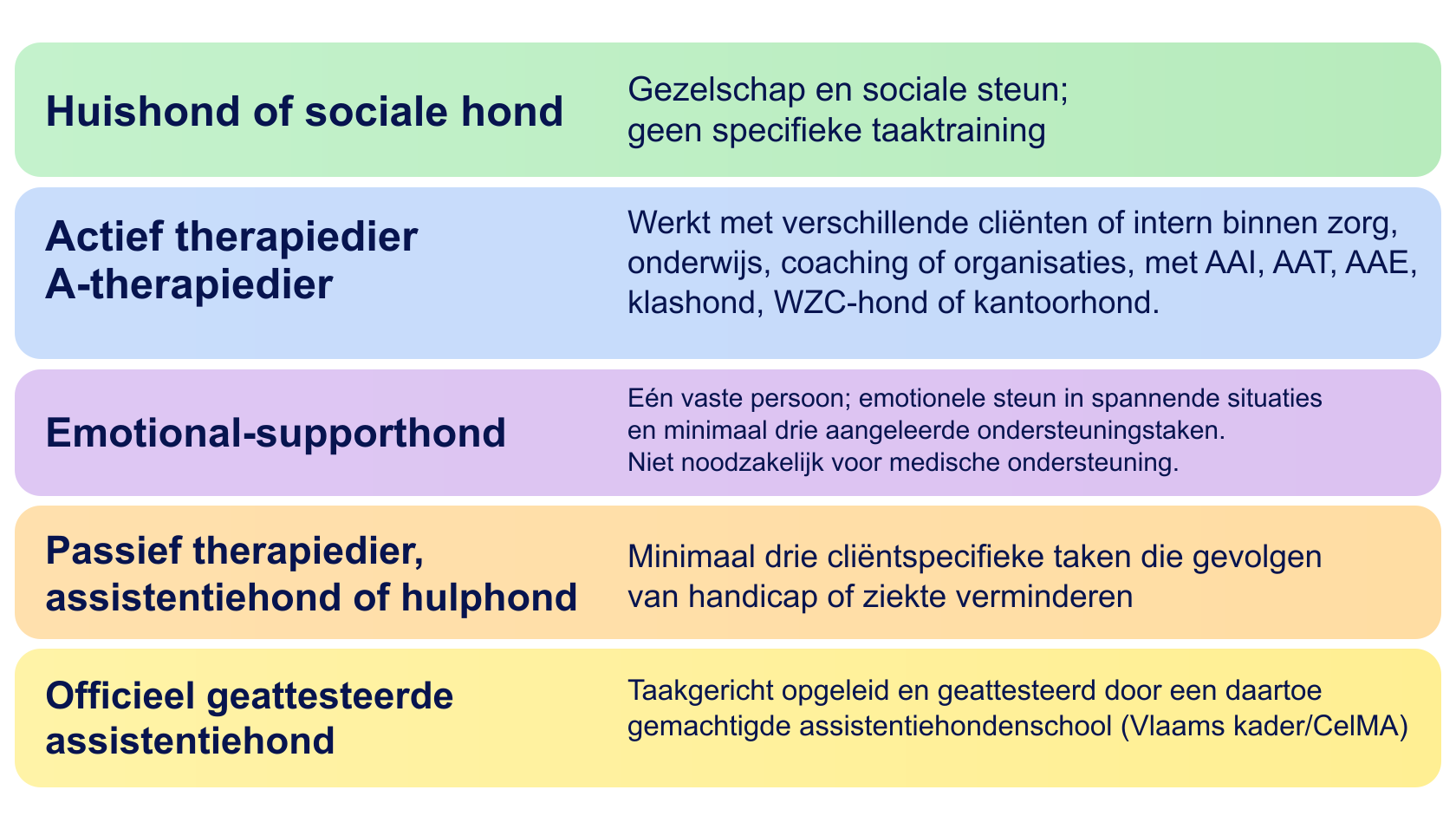
What do we mean by an emotional support dog?
Within the context of Therapiedier vzw usage, we use this term to describe a dog that provides emotional support to one fixed person and learns at least three support tasks that are tailored to that person.
The support can arise from the dog's familiar presence, closeness, tranquility, predictability, and a sense of security. An emotional support dog can provide comfort during, for example, relocation, social interactions, busy environments, changes, waiting, new situations, or other moments perceived as exciting or stressful.
The tasks are specific, observable, and repeatable. The dog’s presence alone is not considered task training. At least three individually trained support tasks are included in the pathway.
Medical Support Is Not Always Required
This pathway does not necessarily require a medical support need. The focus is on meaningful emotional support in everyday situations and on whether the dog can provide at least three suitable, trained tasks without compromising its welfare.
For whom might this course be suitable?
A course of action can be explored for people who in everyday life seek emotional support and guidance in the face of stress, cognitive processing, changes, social participation or difficult situations.
Not every dog and not every situation is suitable. Therefore, we start with an intake and an assessment of the human-dog combination. We look at the expectations, the living environment, the dog’s behavior, and its health, and what is both feasible and responsible.
Guided tours with your own dog
When the combination proves suitable, the owner or family member can participate in guidance. You learn to carefully train and guide the dog in relevant everyday situations and work on calmness, predictability, communication, and a safe collaboration.
The well-being of the dog is central
Support should never mean that a dog must be constantly available. Therefore, we monitor rest, recovery, freedom of choice, physical health, and signs of stress. When a task or situation proves to be inappropriate, the support is adjusted.
Do you want to know if your dog and situation are suitable for this program? Contact us for an exploratory conversation.