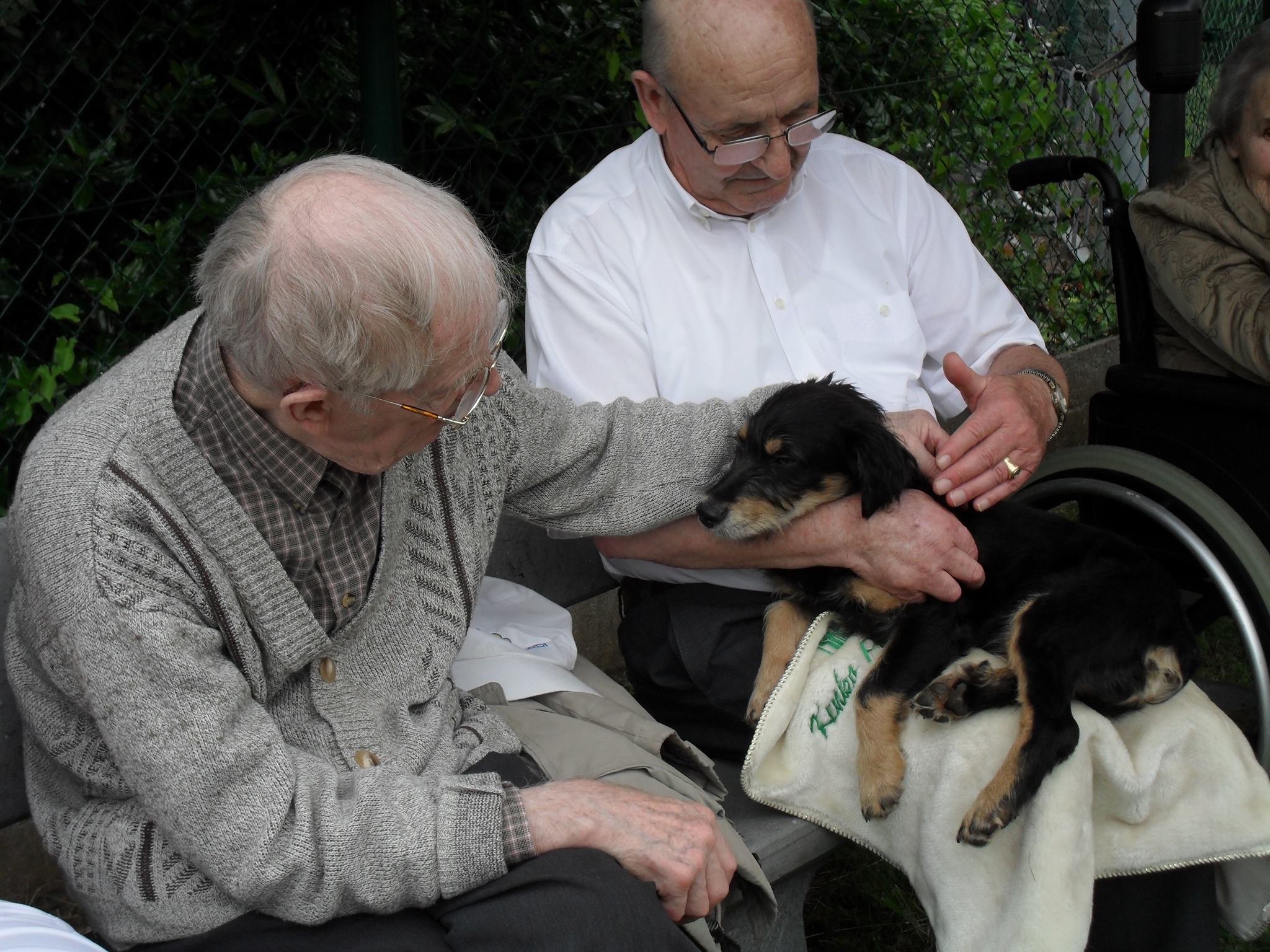
One Animal, One Person, One Sustainable Partnership
An Assistant Dog supports one fixed person in daily life. The animal is not deployed with changing clients, but forms a fixed human-animal combination together with that person.
The dog can provide support with self-reliance, structure, sensory processing, safety, mobility, and quality of life. Depending on the individual support needs, the dog can also be trained to concrete functional and assisting tasks to execute.
The dog’s role goes beyond presence or emotional comfort. The dog learns specific, individualised tasks that reduce the practical consequences of a disability, illness, or support need.
This may include support for people with autism, PTSD, dementia, chronic conditions, physical or functional limitations, overstimulation or other long-term support needs.
Which tasks are taught always depends on the individual situation. Examples include signaling certain changes, interrupting behavior or overload, helping with daily routines, guiding to a safe or quiet place, or performing practical supportive actions.
The training and supervision are therefore continuously tailored to the person, the dog, the specific request for help and the animal's welfare.
Types of support offered by Therapiedier vzw
| Domain | Purpose | Examples of trainable tasks |
| Alert and response | Reporting relevant changes or responding appropriately | Giving a contact signal, bringing a phone or medication pack, getting help, guiding to a safe place |
| Autism | Support for overload, safety, structure and participation | Interrupting overloads, finding a place of rest, supporting the transition routine, giving a contact signal |
| Motor skills | Support daily activities and self-sufficiency | Picking up and bringing items, operating doors, handling clothes, getting help |
| Psychosocial or psychiatric | Functional consequences of mental disorder reduced | Breaking dissociation or panic, finding a way out, applied deep pressure, creating space |
| Emotional support | Providing support in exciting or challenging situations | Making contact, supporting routine, guiding to rest area, offering proximity on cue |
The human–animal partnership and co-training are central
A sustainable process requires more than selecting or training an animal. We look at the person, the living environment, the specific request for help, the expectations, and the character and welfare of the animal.
Selection, training and follow-up
Not every animal suits every person. The process therefore includes a careful introduction, behavioral evaluation, training of the combination, and regular follow-up. We always work realistically, ethically, and with a focus on welfare.
Therapiedier vzw is not currently accredited by Assistance Dogs International (ADI) and is not an assistance-dog school authorised under the Flemish framework. Our certificates and training records document the pathway within our own quality framework; they do not provide automatic public-access rights or entitlement to VAPH reimbursement.
Difference from active and passive therapy animals
One active therapy animal performs animal-assisted interventions for other people together with an animal-assisted therapy handler. A passive therapy animal supports one specific person in daily life.
The internal term “passive therapy animal” refers to a dog that supports one specific person. The dog does more than provide companionship, comfort or emotional support: it performs concrete, individually trained tasks that contribute to the person’s independence and daily functioning. In this context, the term refers to an assistance dog.
Would you like to investigate which form fits your situation? Contact us for an initial interview.