
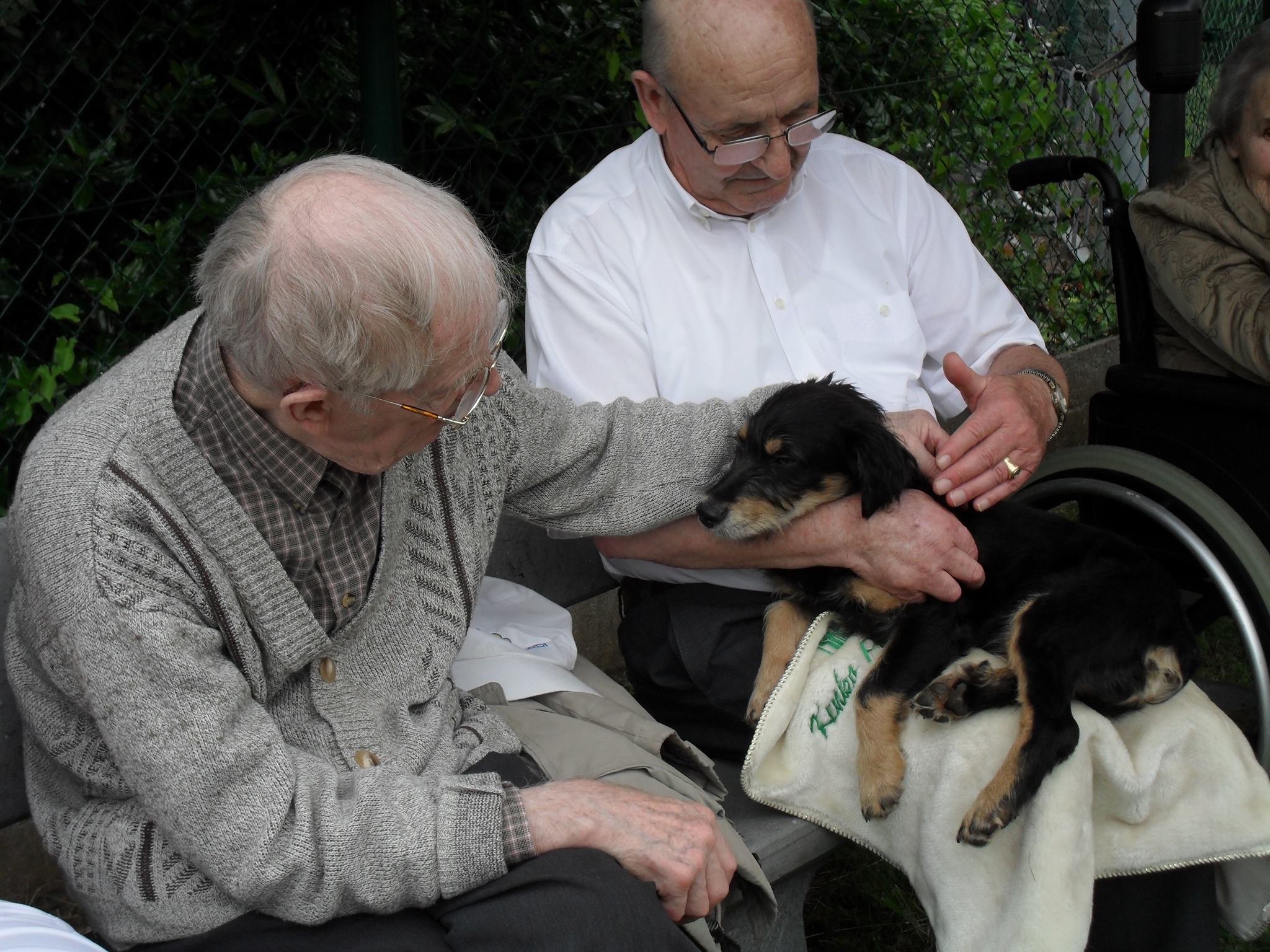
The quality of animal-assisted interventions is determined by what they mean for people and what they demand of animals.
Therapiedier vzw wants to bring together knowledge, practice and quality assurance. We support professionals and organizations with clear principles, evaluation, continuing education and attention to ethics and animal welfare.
Our quality principles
- the well-being of both humans and animals is central;
- the animal is a collaborative partner, not an instrument;
- objective, target group and work context are defined in advance;
- the supervisor works within the limits of their own expertise;
- behavior and stress signals are continuously observed;
- safety, hygiene and professional responsibility are guaranteed;
- Evaluation and adjustment are part of any sustainable operation.
Animal welfare
Animal welfare means more than the absence of disease or pain. A therapy animal must feel safe, get enough rest, be able to exhibit natural behavior, and experience freedom of choice. Positive experiences, resilience, and motivation are also part of a welfare-oriented assessment.
Ethics and Professional Responsibility
Professional work requires continuous reflection. Is the intervention appropriate? Can the animal communicate freely and stop? Are the expectations realistic? Are the interests of the client, practitioner, organization, and animal weighed in a balanced manner?
Knowledge base
In our knowledge base, we collect articles, practical insights, and publications on topics including the Five Domains Model, One Health and One Welfare, stress and relaxation signals, nonviolent communication, safety, hygiene, and various work contexts.
Continuing professional development and peer review
Quality does not stop after training or certification. Through study days, further education, peer review, supervision, and recertification, we support professionals in continuous development and responsible practice.
Protocols and quality framework
We are building practical guidelines for selection, screening, workload, rest, safety, hygiene, incidents, registration, and evaluation. These documents help organizations to organize animal-assisted interventions in a sustainable and verifiable manner.