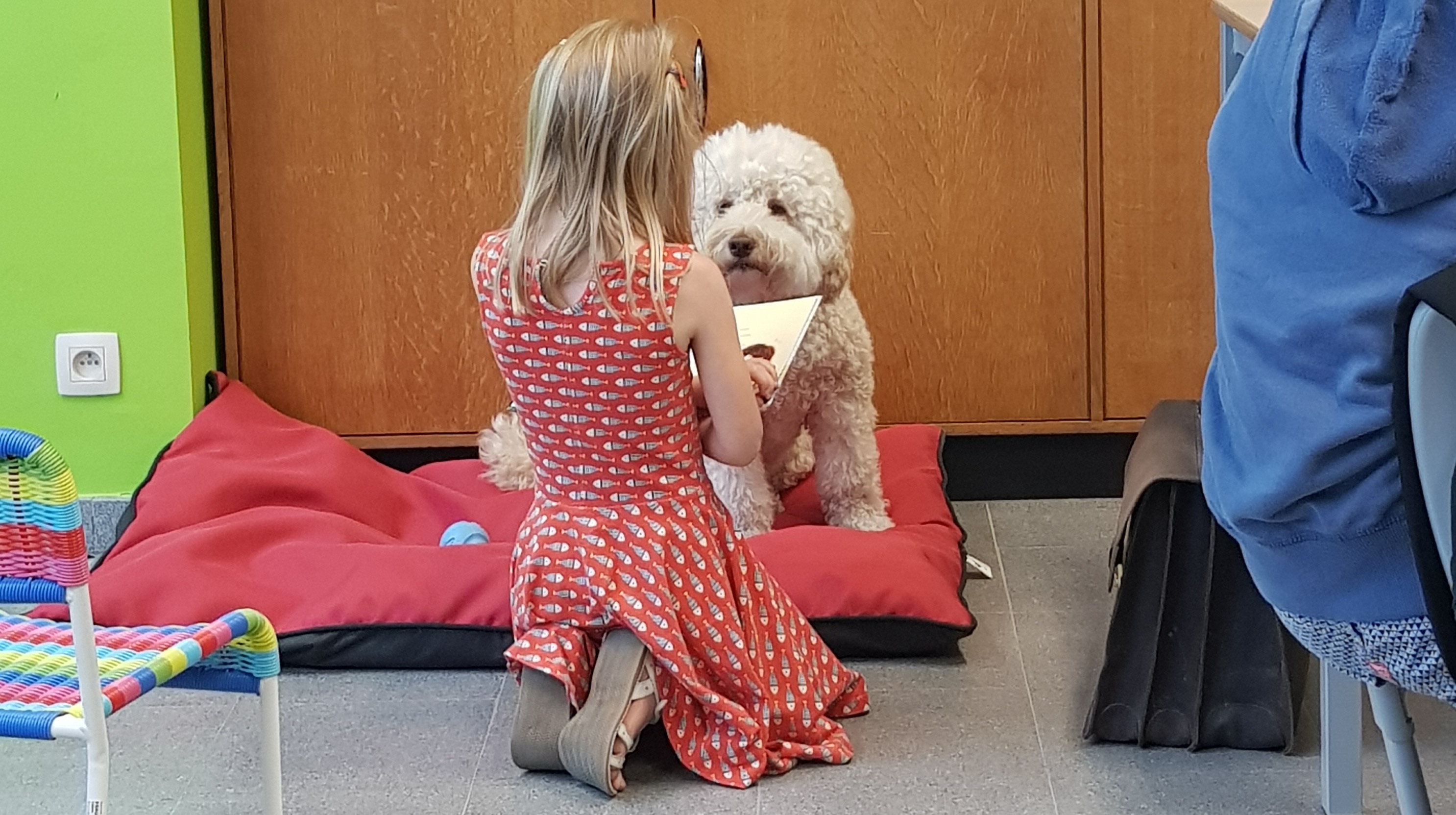
“Every animal has a therapeutic function”
A horse as a therapist, an alpaca as a buddy, or a dog as a cuddly toy: at the non-profit organization therapy animal, they understand that animals are not just animals. Inge Pauwels, behavioral therapist and chairwoman of the non-profit organization therapy animal, trains rabbits, cats, horses, dogs, alpacas, and dogs to be cuddly therapists: “For every owner in need of care, there is a suitable buddy. It is a matter of matching personalities.”
By MAUD VANMEERHAEGHE
Is every animal suitable as a therapy animal?
“Every animal can have a therapeutic function, but not every animal is able to actively take on that role. Fish, for example, are very soothing to watch and guinea pigs are nice to stroke. But using them to physically support occupational therapy sessions is out of the question. Therefore, when looking for therapy animals, we primarily look at animals with a certain intelligence. Horses, ponies, dogs, cats, rabbits, and alpacas are suitable. You can teach them a certain conditioning, although dogs are most suited for that.”
How are animals selected as therapy animals?
“Each animal goes through tests that provide insight into their personality and social character. That final test shows whether animals can function in a social context. The purpose of that test is twofold: we want to protect not only the future owner, but also the animal itself. Many people enjoy working with animals, but not everyone makes an equally good match.”
“We also take the test results into account for his job description. A dog that likes to work with its nose can be the perfect match for diabetics. An animal that shows less interest in that can also follow that training, but it will take more effort and motivation. It makes more sense to look for his qualities and optimize them in a different role. As a buddy dog, for example.”
A dog looks like its owner, it is often said. Does that apply to therapy animals as well?
“Oh yes. We try to match the character of each animal with the personality of its owner. Active dogs are out of the question for seniors, because in their enthusiasm they could injure the elderly. Calm dogs that do not jump up are a better match in that case. With teenagers or young adults, you best not show up with a chihuahua. A larger dog is more appealing. In any case, it is not necessarily about breed or gender: it is the personality of the animal that ensures a successful match.”
“At vzw Therapiedier, we strongly encourage the bond between owners and their animals. Other organizations first have the animals trained by professional trainers. We introduce the animal to its partner as soon as possible, so that they can go through the training together. This immediately establishes a strong foundation, which for us is the most important requirement for a good relationship. First a bond, then training.”
What tasks can animals take on?
“We make the distinction between active and passive therapy animals. The former have a therapy animal handler and travel to schools, residential care centers, or home settings. That is often as a cuddling dog, but an animal can equally support educational processes to teach children how to interact with them.”
“Passive therapy animals have their own care-dependent owner. They can support their owner's physical activities and assist with motor issues. Just think of helping to pick things up or opening doors.”
Can animals also promote rehabilitation?
“Sure. Patients with a motor impairment are not always keen on therapy to learn how to use their hands again. If we can link that therapy to their therapy animal, they are enthusiastic. ‘Simply’ opening a jar becomes a lot more interesting if it contains treats they can use to reward their dog. (smile) Also for a patient who is learning to walk again, motivation grows immediately when they can take those steps with a dog by their side.”
For care recipients, therapy animals have a stress-reducing effect. Can ‘working’ become stressful for the animals themselves?
“We are very alert to that. Research shows that ninety minutes of work is the maximum for therapy animals. If you go beyond that, the animal may experience stress. In occupational therapy sessions, for example, that working time is easy to determine. For the animal, those training sessions are accompanied by positive feelings, because to them they feel like playtime.”
“For animals that are ‘on watch’ – because they work for an epileptic owner, for example – working hours are more difficult to measure. We keep a close eye on them. For example, we never allow those animals to also have to function in groups. Acting weekly as a therapy dog in a residential care center on top of the task as seizure alert dog excluded: animal welfare always comes first. Therapy animals must be happy.”


