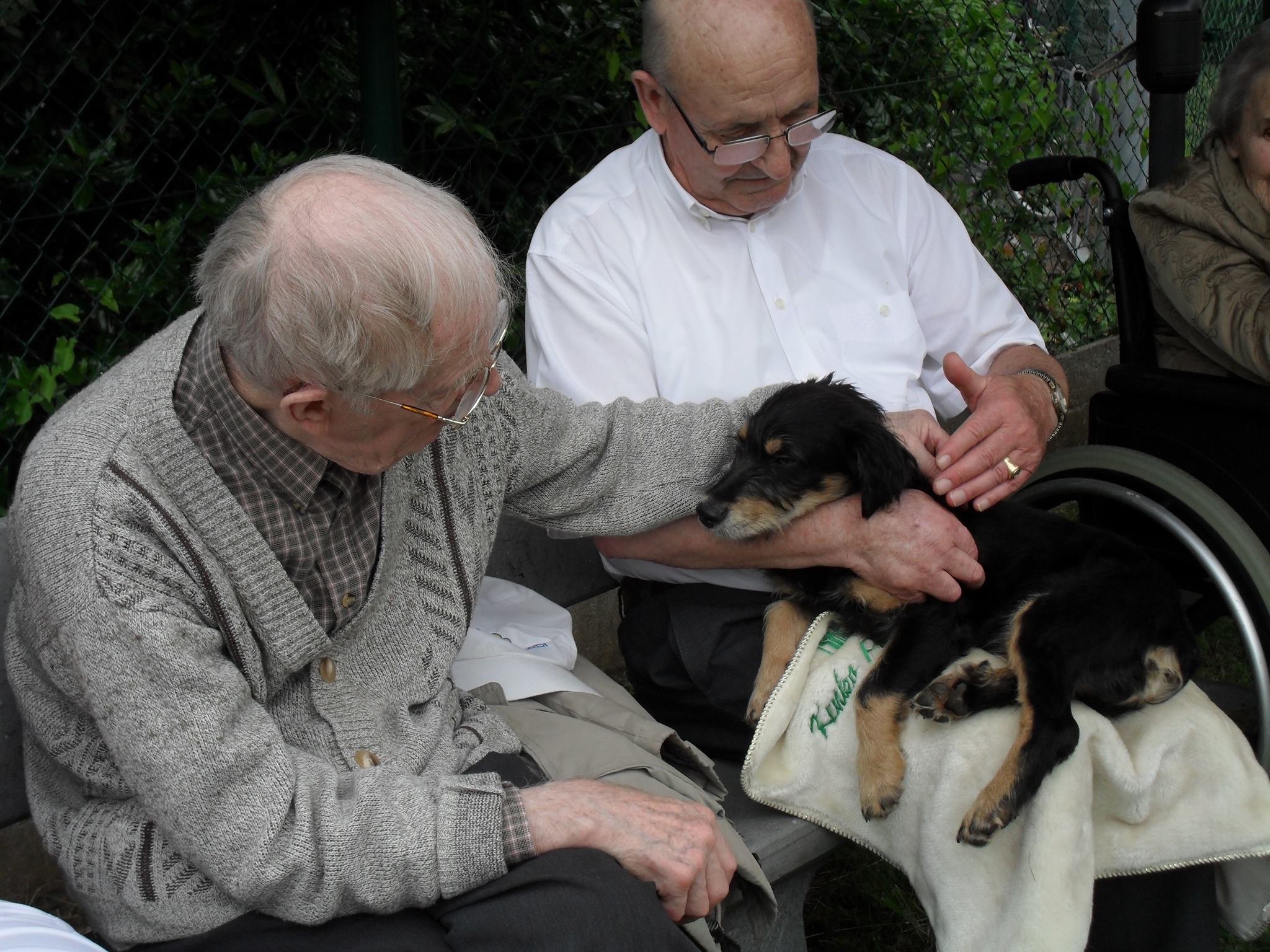
Professional support with attention to people, animals, and the care context.
A therapy dog, together with a trained handler, can contribute to well-being, social connection, motivation, and a warm care environment. This intervention does not replace medical or therapeutic treatment and is always coordinated with the professionals involved.
Possible care contexts
- residential care centers and dementia care;
- hospitals and pediatric wards;
- rehabilitation centers;
- mental health care;
- facilities for persons with disabilities;
- youth care and supported living;
- palliative care and day care centers.
What does this demand of a team?
Healthcare environments can be busy, emotional, and unpredictable. A therapy animal team must be able to handle medical equipment, unexpected sounds, intense emotions, and changing contacts. The handler monitors working hours, rest, hygiene, safety, and professional boundaries.
Training and certification
Therapiedier vzw organizes the professional training and assesses cooperation, animal welfare, safety, and suitability for the chosen care context. Toscanzahoeve acts as a supporting partner in terms of content and practical application. Evaluations follow established criteria and transparent procedures.
Advice for healthcare organizations
We support organizations with risk analysis, policy, infection prevention, implementation, staff training, and follow-up. This embeds operations into care practice rather than relying on loose agreements.