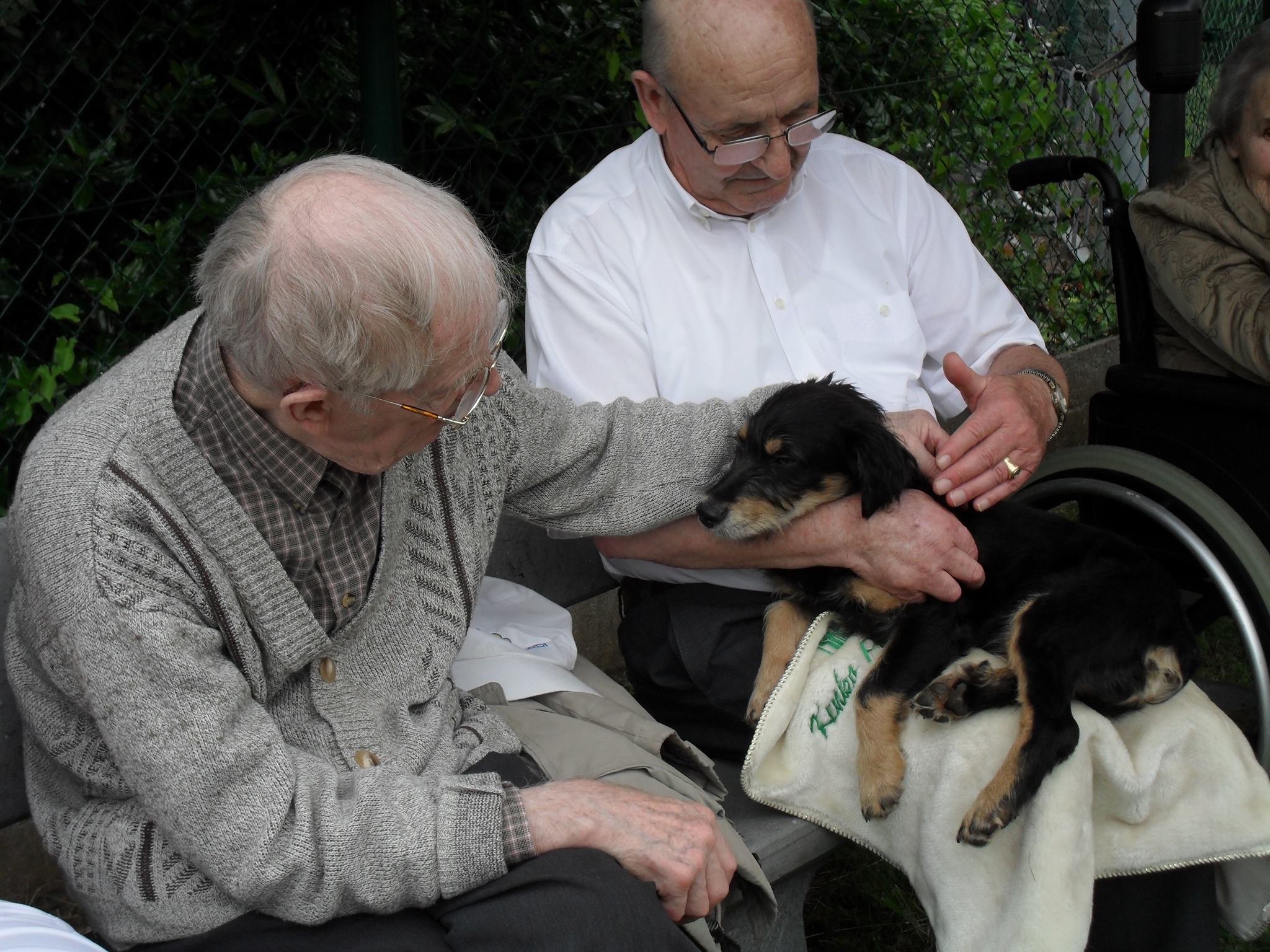
Working professionally with a therapy animal requires a practitioner to listen simultaneously to the client, the context, and the animal's body language.
Observe before interpreting
“The dog is stubborn” is a judgment. “The dog keeps its distance, looks away, and does not move along” is an observation. By first accurately describing observable behavior, we reduce the chance that human expectations drive the assessment.
Four steps
- describe what you objectively observe;
- mention what this evokes in you;
- investigate which need or interest is affected;
- Formulate a concrete request that leaves room for a response.
Limits of humans and animals
A handler not only protects the client, but also the animal's freedom of choice and boundaries. When a dog seeks distance, freezes, or repeatedly tries to end contact, the interaction is adjusted or stopped.
Three-way communication
Within AAI, client, practitioner, and animal communicate continuously with each other. The practitioner translates signals, monitors safety, and helps human participants respond respectfully without interpreting behavior too hastily.
Nonviolent communication is therefore not a soft addition, but a professional skill that brings together observation, empathy, clear boundaries, and animal welfare.


