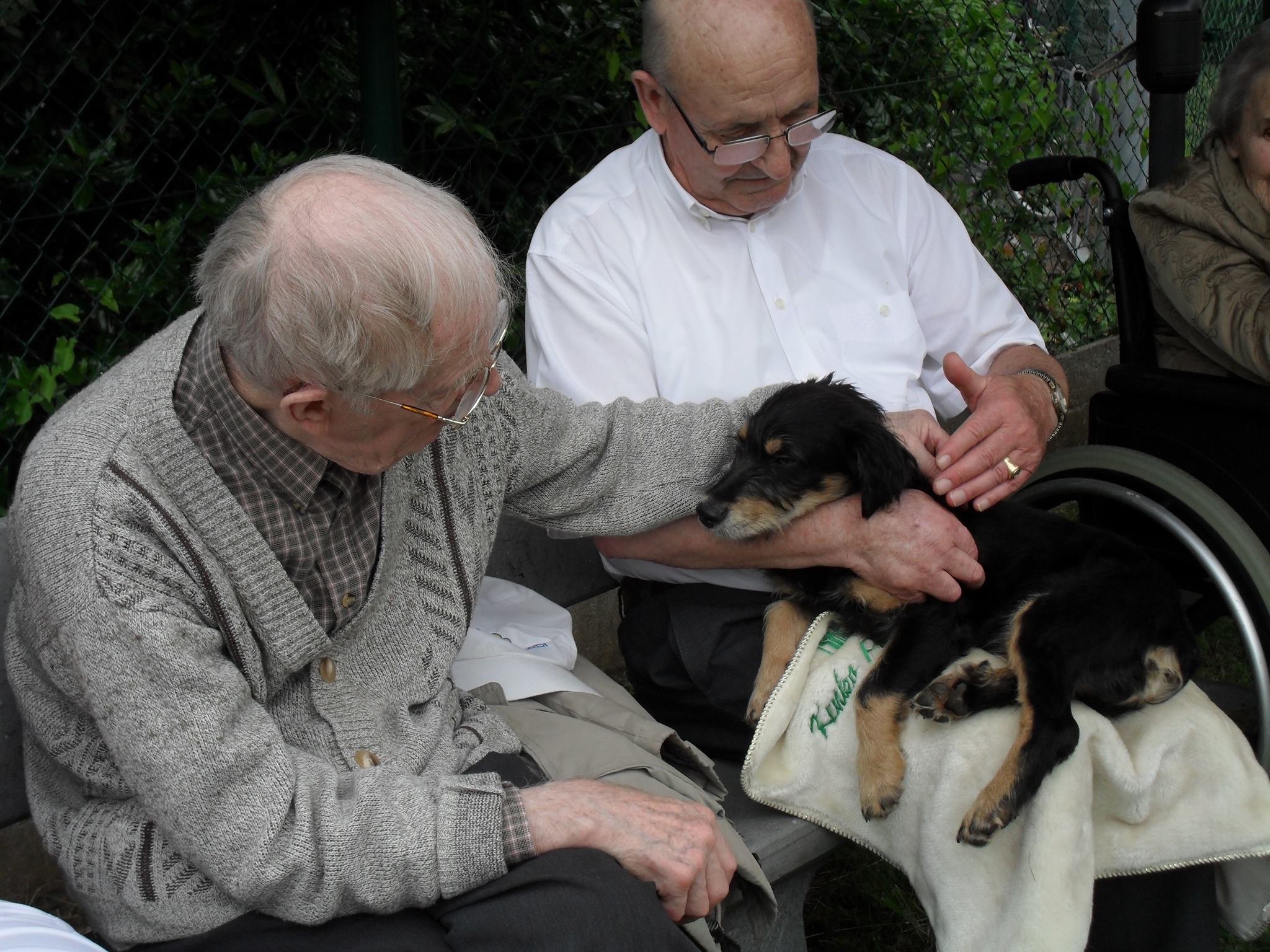
A qualitative animal-assisted intervention is evaluated not only on what it yields for the client, but also on what it demands of the animal.
More than just being healthy
An animal can be physically healthy and still experience long-term stress. Welfare therefore includes nutrition, environment, health, behavior, and mental state. Rest, freedom of choice, predictability, social safety, and positive experiences are also important.
Subtle stress signals
Stress is not only visible through barking, growling, or running away. Looking away, lip-licking, yawning, freezing, panting, moving slower, or increased muscle tension can be reasons to reassess the context. A single signal never has a fixed meaning independent of the situation.
From using to collaborating
A therapy animal is not a therapeutic tool. Working professionally means treating the animal as an active collaborative partner, taking signals seriously, and stopping or adapting when welfare or safety is compromised.
Professional responsibility
- assess in advance whether the animal, handler, and environment are a good match;
- determine clear rest and stop criteria;
- track taxation and recovery;
- observe behavior objectively;
- regularly evaluate whether continuing to work remains responsible.
Animal welfare is not an additional quality label. It is a basic prerequisite for any responsible operation involving therapy animals.


