Within the world of animal-assisted interventions, various terms such as AAA, AAE, AAT, AASP, and AAPP are often used. These abbreviations are used internationally, including by organizations such as Animal Assisted Services International (AASI), to clarify how animals are utilized in different contexts.
Yet this often causes confusion. Because when is something therapy? When is it education? And when is it coaching or training?
In this blog, we clearly explain the different categories with practical examples from daily practice.
? AAA – Animal Assisted Activities
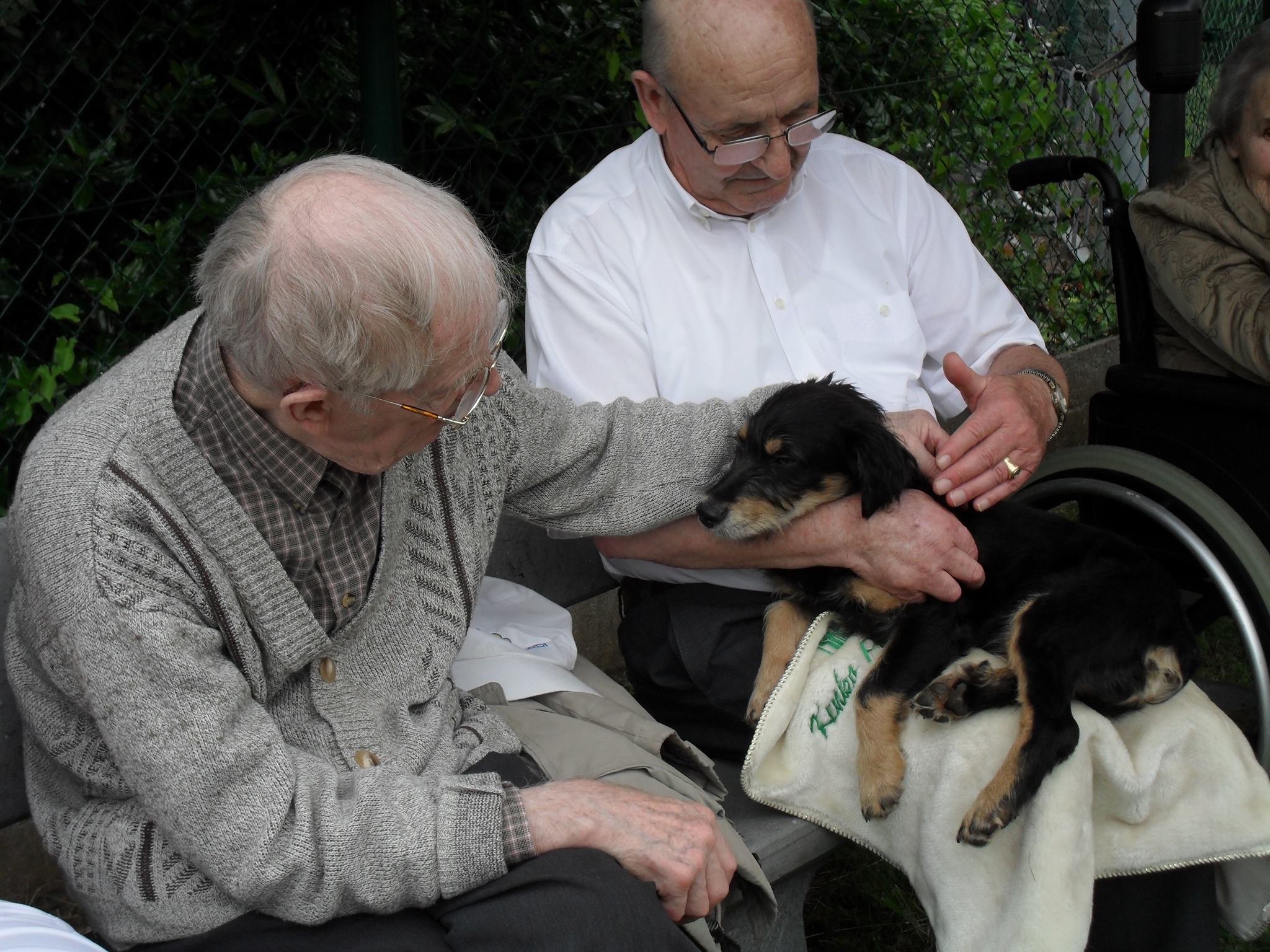
AAA stands for animal-assisted activities that are mainly focused on well-being, contact, and relaxation.
There are no fixed learning or treatment plans, but the presence of the animal provides social contact, calmness, and emotional well-being.
Examples are:
- Cuddle visits in residential care centers
- Group therapy animal encounters
- Visits to events or institutions
- Moments of relaxation with animals
AAA is mainly about connection and well-being, without a therapeutic or educational framework.
? AAE – Animal Assisted Education
AAE is about animal-assisted education with clear learning objectives, implemented by a recognized educational professional within the organization.
The animal is used here as support within a learning process.
Examples are:
- Reading projects with dogs in a school context, supervised by a teacher
- Educational sessions with learning objectives centered around animals or behavior
When no internal teacher is involved, a collaboration often falls under C-AAE.
? C-AAE – Collaboration in Animal Assisted Education
At C-AAE, we collaborate with schools or teachers that are external to the organization.
The organization supports the learning process with animals, but the educational responsibility lies with the school.
Examples are:
- Reading dog projects in libraries
- Guest lectures in schools or colleges
- Educational workshops on animals and behavior
? AAT – Animal Assisted Therapy
AAT is therapy in which animals are used within a professional therapeutic framework.
This takes place under the responsibility of a recognized healthcare professional within the organization.
There are clear treatment goals and an individual therapy plan.
Examples are:
- Therapy with an occupational therapist who incorporates a dog into treatment
- Psychological counseling supported by a therapy animal
C-AAT – Collaboration in Animal Assisted Therapy
Here, animals work together with external healthcare professionals in therapeutic settings.
The therapist remains ultimately responsible, but the animal supports the process.
Examples are:
- Occupational therapists in nursing homes who work with therapy dogs
- Psychologists who integrate animals into their sessions
- Rehabilitation centers where animals are used in therapy
? AASP – Animal Assisted Special Programs
AASP comprises structured programs with specific goals that are neither purely therapy nor education.
It is often about coaching, training and personal development.
Examples are:
- Animal Mirror® coaching
- Guidance for fear of dogs
- Team days and group coaching with animals
- Training programs for therapy animal handlers
- Animal-assisted training and development programs
? AAPP – Animal Assisted Placement Programs
AAPP focuses on the training, selection, and guidance of animals and teams deployed in AAA, AAE, AAT, or AASP.
It is the “preparatory” layer: preparing human and animal alike for professional work.
Examples are:
- Training of therapy animal handlers
- Training and evaluation of therapy dogs
- MAG test and certification of teams
- Guidance for professionals who work with their own dog
Why this classification is important
These categories help create clarity in a fast-growing field. They make it possible to:
- better understand what we are doing with animals
- to monitor quality and ethics
- to structure collaboration between healthcare, education, and animal-assisted work
- to deploy animals in a responsible manner
? Finally
Animal-assisted interventions are not a “one size fits all” practice. They consist of different levels of guidance, collaboration, and professionalism.
By using this layout, we can work more consciously with animals — with respect for both human and animal.


 Therapy dogs and hygiene: dirtier than humans? On the contrary.